5 Quick Steps to Use Organic Methods
The scent of decomposing leaf litter signals the start of a soil revolution. When you commit to steps to use organic methods, you abandon synthetic inputs and instead partner with bacteria, fungi, and arthropods to build fertility from the ground up. Each handful of finished compost contains approximately 1 billion microorganisms per gram, actively cycling nutrients your plants can absorb without chemical intermediaries.
Materials
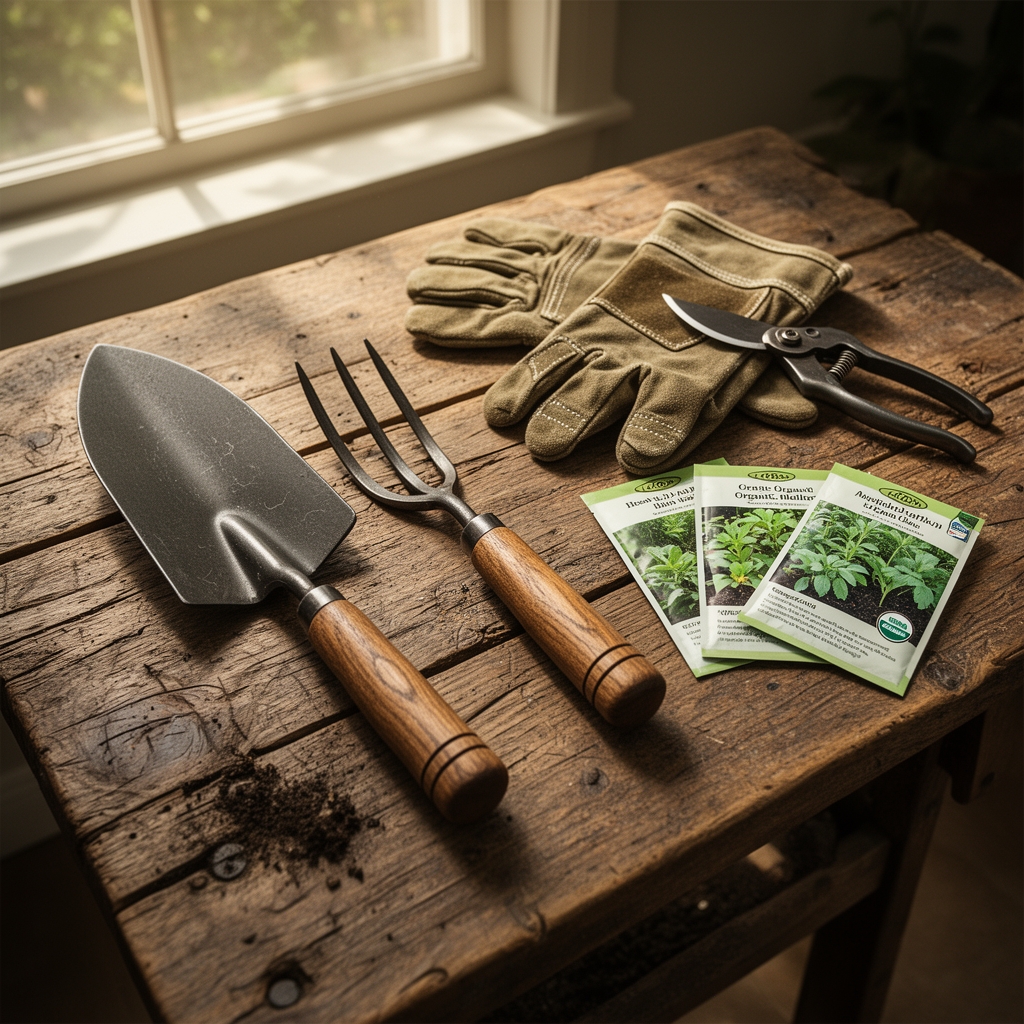
Selecting the right organic amendments requires understanding both pH influence and nutrient ratios. Feather meal delivers nitrogen at 12-0-0 but raises pH slightly, making it ideal for acidic soils below 6.0. Blood meal offers 13-0-0 with faster release, suitable for quick greening in established beds. Bone meal (3-15-0) supplies phosphorus for root development and works best in neutral to slightly acidic conditions. Kelp meal (1-0-2) provides trace minerals and cytokinins that stimulate cell division.
For balanced feeding, seek blended organic fertilizers in the 4-4-4 or 5-5-5 range. These typically combine alfalfa meal, rock phosphate, greensand, and composted poultry manure. Cation exchange capacity improves when you incorporate biochar at 10 percent by volume, creating negatively charged sites that hold calcium, magnesium, and potassium. Sulfur amendments lower pH by 0.5 units per pound applied per 100 square feet, essential for alkaline soils above 7.5.
Compost should reach 131°F during thermophilic decomposition to eliminate weed seeds and pathogens. Finished material exhibits a carbon-to-nitrogen ratio near 20:1 and crumbles easily without ammonia odor. Mycorrhizal inoculants contain Glomus intraradices and related species at concentrations of 100 propagules per gram, extending root reach by 10 to 100 times.
Timing
Hardiness zones dictate when soil temperatures permit microbial activity. In Zones 3-5, organic matter incorporation begins two weeks after the last spring frost, typically mid-May through early June when soil reaches 50°F at four inches depth. Zones 6-7 allow amendment application in mid-April, while Zones 8-10 support year-round applications with peak activity in March and October.
Fall amendments decompose slowly over winter, releasing nutrients for spring planting. Apply composted manure and leaf mold between September 15 and October 31 in northern zones, allowing freeze-thaw cycles to improve soil aggregation. Southern gardeners in Zones 9-10 should wait until November to avoid nitrogen volatilization in warm soils.
Green manures require specific timing. Crimson clover sown in early September in Zone 7 fixes 70 to 150 pounds of nitrogen per acre before spring termination. Winter rye planted six weeks before first frost produces biomass for spring tillage, adding organic matter while suppressing early weeds.
Phases

Sowing
Direct seeding into organically managed soil requires fine tilth in the top two inches. Rake beds smooth after incorporating compost at one cubic foot per four square feet. Seed depth should equal three times seed diameter. Pelleted seeds simplify spacing but add clay coatings that delay germination by 12 to 24 hours.
Soil blocking eliminates transplant shock by preserving root architecture. Mix four parts peat or coir with one part compost and one part sand. Add one-quarter cup of kelp meal per gallon of mix to supply trace elements. Blocks dry faster than plastic cells, requiring daily moisture checks.
Pro-Tip: Dust seeds with powdered mycorrhizal inoculant immediately before sowing. Fungal hyphae colonize roots within 72 hours, improving phosphorus uptake by 30 percent in low-fertility soils.
Transplanting
Harden seedlings over seven days by gradually reducing water and increasing light exposure. Transplant on overcast days or in late afternoon to minimize moisture stress. Dig holes 50 percent wider than root balls. Mix one tablespoon of bone meal into backfill soil for fruiting crops.
Water transplants with compost tea diluted 4:1 to introduce beneficial bacteria. Avoid disturbing root balls; tom roots release ethylene that temporarily halts growth. Space determinate tomatoes 24 inches apart, indeterminate varieties 36 inches to ensure adequate airflow and light penetration.
Pro-Tip: Prune tomato seedlings to a single stem by removing suckers at 45-degree angles with sterilized shears. This concentrates auxin distribution into fruiting branches, increasing yields by 15 to 20 percent.
Establishing
Mulch with two to three inches of shredded leaves, straw, or wood chips after soil warms to 60°F. Mulch moderates temperature swings, suppresses annual weeds, and feeds decomposer organisms. Keep material two inches away from plant stems to prevent collar rot caused by Rhizoctonia or Pythium species.
Side-dress heavy feeders with composted chicken manure at four weeks and eight weeks post-transplant. Apply one-quarter cup per plant in a six-inch ring around the drip line. Water immediately to move nutrients into the root zone.
Pro-Tip: Install drip irrigation on 12-inch emitter spacing to deliver water directly to roots. This reduces foliar wetness that encourages Septoria leaf spot and early blight, cutting fungal disease incidence by 40 percent compared to overhead watering.
Troubleshooting
Symptom: Yellowing lower leaves with green veins.
Solution: Nitrogen deficiency. Top-dress with alfalfa meal at one pound per 25 square feet. Alternatively, apply fish emulsion at two tablespoons per gallon weekly for three weeks.
Symptom: Purple leaf undersides and stunted growth.
Solution: Phosphorus unavailability, often in cold soils below 55°F. Warm soil with black plastic mulch for one week. Apply liquid kelp foliar spray at one tablespoon per gallon to provide immediately available phosphorus.
Symptom: Brown leaf margins with cupping.
Solution: Potassium deficiency. Broadcast greensand at five pounds per 100 square feet or apply wood ash at one pound per 100 square feet if soil pH remains below 6.8.
Symptom: Holes in leaves with dark frass trails.
Solution: Lepidopteran larvae feeding. Hand-pick caterpillars at dawn. Apply Bacillus thuringiensis var. kurstaki at label rates every seven days. Inspect leaf undersides for egg clusters.
Symptom: Wilting despite adequate moisture.
Solution: Root-knot nematodes (Meloidogyne spp.). Solarize soil by covering with clear plastic for six weeks during peak summer heat. Rotate with French marigolds (Tagetes patula), which release alpha-terthienyl that reduces nematode populations by 60 percent.
Maintenance
Water deeply once per week, delivering one inch measured with rain gauges or tuna cans. Sandy soils require 0.75 inches twice weekly. Clay soils accept 1.5 inches every 10 days. Irrigate early morning to allow foliage to dry by midday.
Weed by shallow cultivation in the top one inch to avoid root pruning. Hoe when soil surface just dries, making weed removal 80 percent easier than in compacted soil. Flame weeders work effectively on gravel paths, applying heat at 2000°F for one second per weed.
Foliar feed every 14 days with compost tea or liquid seaweed. Spray until droplets form on leaf undersides where stomata concentrate. Add one teaspoon of vegetable oil per gallon as a surfactant to improve coverage.
Prune indeterminate tomatoes weekly, removing suckers below the first fruit cluster. Cut at 45 degrees one-quarter inch above nodes. Sterilize tools between plants with 10 percent bleach solution to prevent tobacco mosaic virus transmission.
FAQ
How long before organic methods improve soil?
Visible improvements appear within 90 days as organic matter increases by 0.5 percent. Full conversion requires three to five years to rebuild microbial populations and stabilize nutrient cycling.
Can I use fresh manure?
No. Fresh manure contains ammonia levels exceeding 5000 ppm, burning roots and introducing pathogens like E. coli. Compost manure for 120 days, turning piles when internal temperature drops below 100°F.
What organic controls work for aphids?
Release ladybugs (Hippodamia convergens) at 1500 per 500 square feet. Spray insecticidal soap at 2 percent concentration, coating aphids directly. Plant sweet alyssum borders to attract parasitic wasps (Aphidius colemani).
How much compost annually?
Apply one-half inch (0.8 cubic yards per 100 square feet) each spring. This replaces organic matter lost to mineralization and maintains stable soil structure.
Do organic methods reduce yields?
Initial yields may drop 10 to 15 percent during transition. After three years, yields match or exceed conventional systems as soil biology matures and nutrient cycling stabilizes.